
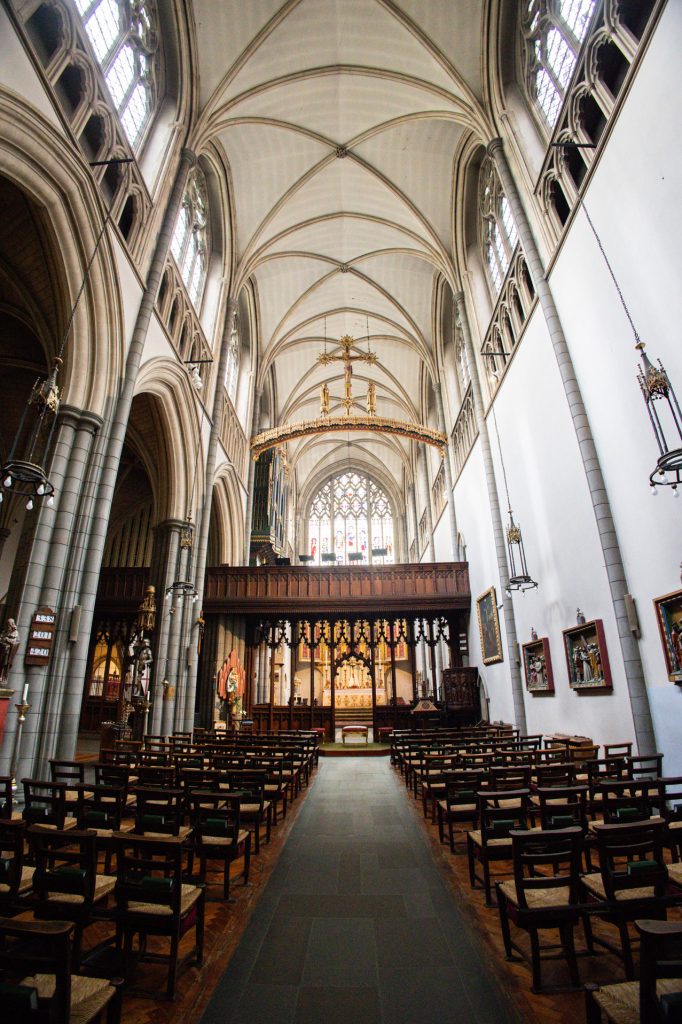
One of London’s most remarkable early twentieth-century churches.
A landmark church near Marble Arch
A video of drone footage of the Church of the Annunication.
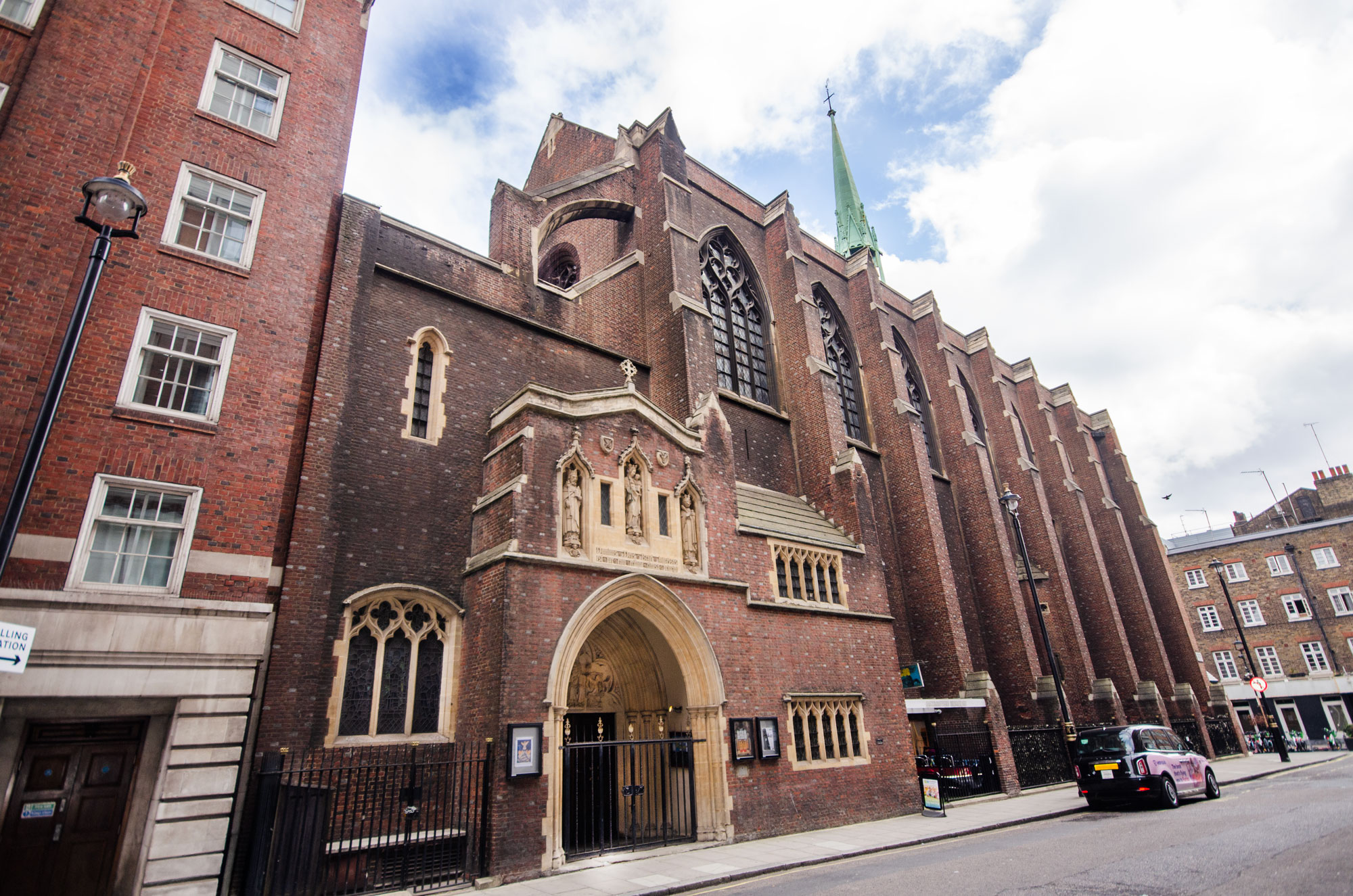
The Church of the Annunciation, Marble Arch is one of London’s most remarkable early twentieth-century churches. Located on Bryanston Street, close to Marble Arch and Oxford Street, it is both an active parish church and a building of exceptional architectural and historic importance.
The present church was designed by Sir Walter Tapper and completed in 1912–13. It is widely regarded as Tapper’s finest ecclesiastical work and is listed Grade II*. The church also stands within the Portman Estate Conservation Area.
Sir Walter Tapper

Walter Tapper was one of the leading church architects of his generation. He was a Royal Academician, a Fellow of the Society of Antiquaries and later became Surveyor to the Fabric of Westminster Abbey, where he is buried.
At the Annunciation, Tapper’s design shows an extraordinary control of space, light, proportion and detail. Much of the original design remains intact, including many of the liturgical fittings and decorative features for which Tapper himself was responsible.
Architectural and heritage significance

The church is an important example of Gothic Revival architecture adapted for a modern urban setting. Its interior is notable for the quality of its light, with lighting confined to the clerestory and the triforium carried over the nave arches.
The building also contains an extensive collection of ecclesiastical vestments and religious fabric, including rare and one-off pieces, examples connected with the original Quebec Chapel, early pieces from the seventeenth century and fine Victorian embroidery.
The Calvary War Memorial
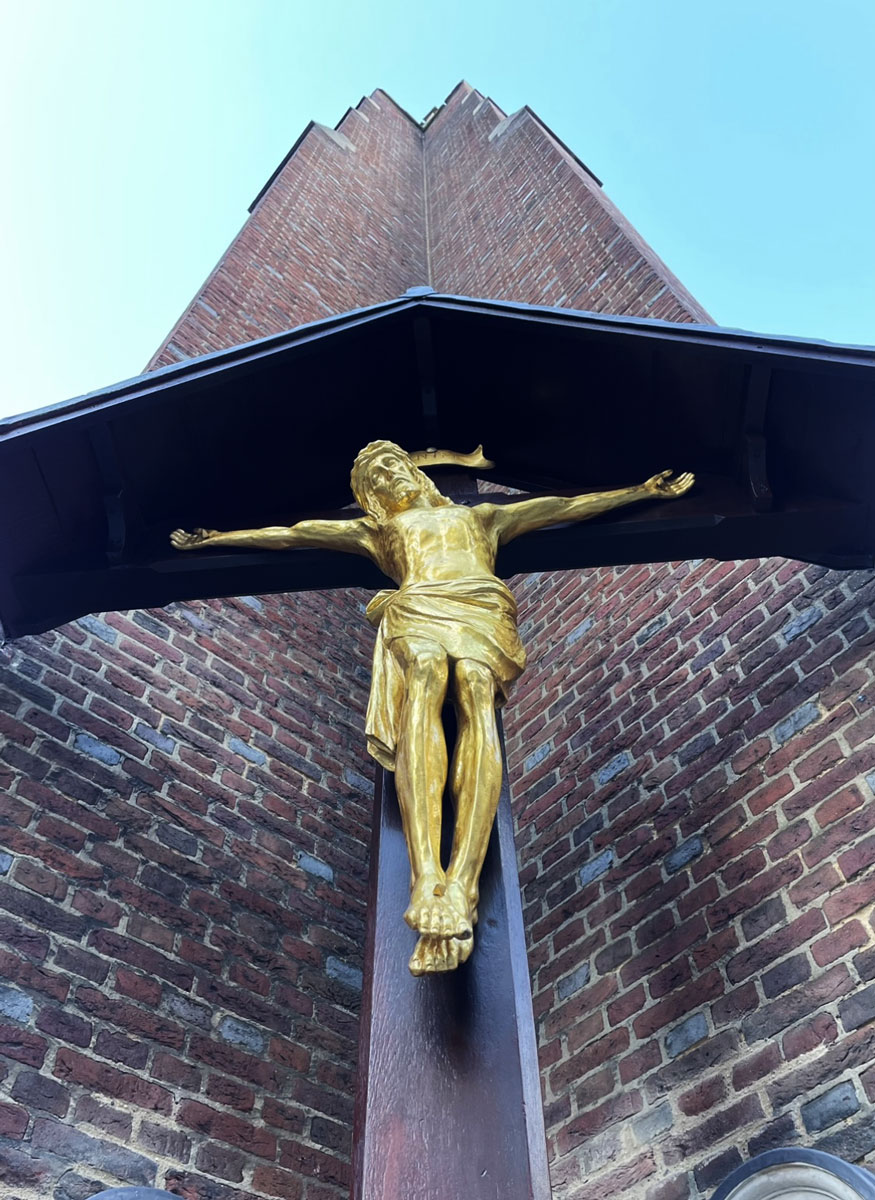
On the south-east corner of the church, at Old Quebec Street and Bryanston Street, stands the Marylebone Calvary War Memorial. The memorial commemorates those who lost their lives in the First World War, including local servicemen from a wide range of regiments.
It is thought to have been installed shortly after the construction of the present church, with a design also attributed to Walter Tapper. It continues to be a place of remembrance, reflection and prayer, close to the bustle of Oxford Street.
A living church
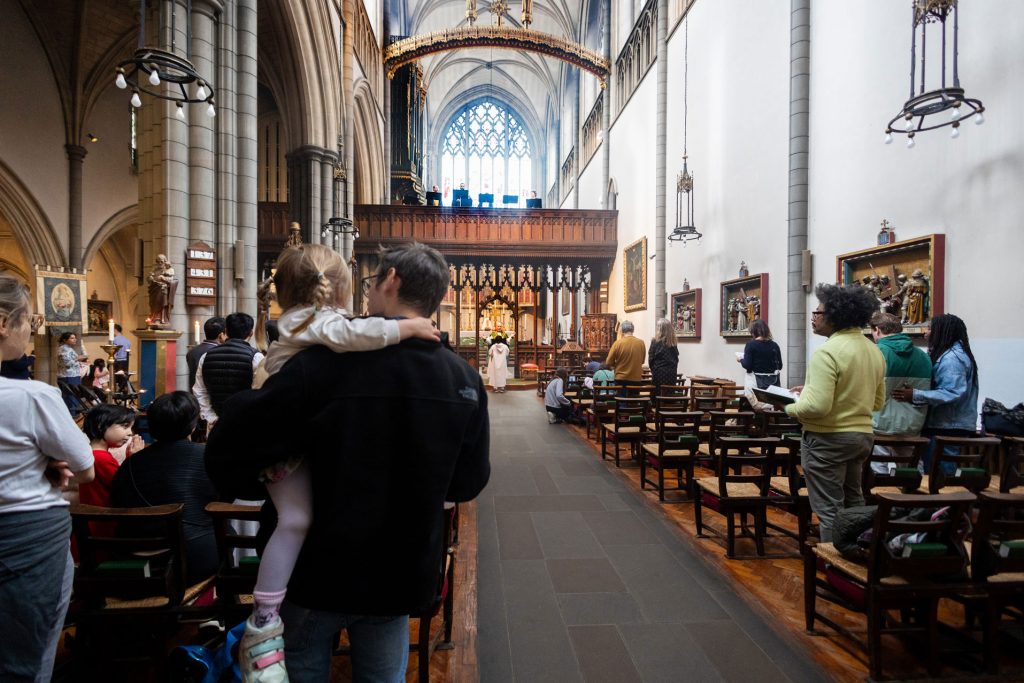
The Annunciation remains a place of worship, welcome and community. Its heritage matters not only because of the building’s beauty and historic importance, but because it continues to serve the people who worship, visit, learn, gather and find quiet within its walls.